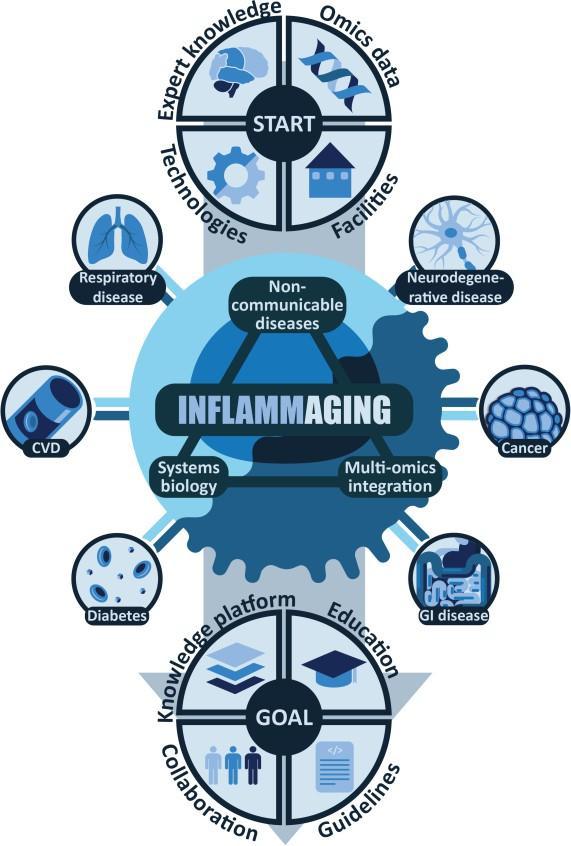
The INFLAMomx initiative stems from the fact that the prevalence of non-communicable chronic diseases increases with age, thereby elevating the public health burden they create. With the expected growth of the older population, a rise in co- and multimorbidity is anticipated, highlighting prevention as one of Europe’s key scientific priorities. Central to this focus is inflammaging – a chronic, low-grade inflammatory state that develops with ageing and contributes to the onset of cardiovascular, neurodegenerative, and metabolic disorders.
Within this context, INFLAMomx aims to deepen the understanding of inflammaging and its role in the development of non-communicable diseases by applying advanced multi-omics methodologies. The project’s core objective is to establish an advanced bioinformatics framework that enables the integration of data from various omics sources, thereby improving precision diagnostics, monitoring, and prevention of inflammaging-related conditions.
The project brings together a broad pan-European network of experts in molecular biology, medicine, bioinformatics, and healthcare, encouraging collaboration among researchers at all career stages. In addition, INFLAMomx seeks to standardise methods for multi-omics data integration and to train a new generation of scientists with an integrative mindset – bridging the gap between wet-lab researchers and computational specialists.
A significant part of the initiative is dedicated to raising awareness about healthy ageing and prevention through targeted activities for the general public, patient organisations, the media, and policymakers. These efforts help create a foundation for future innovations and their translation into clinical practice.
As part of the consortium, C4IR Serbia, operating within the Office for IT and eGovernment, contributes by developing standards and frameworks for data integration, drawing on national resources such as the State Data Centre and the National AI Platform. The team is also involved in activities related to clinical implementation, education, and project dissemination, further strengthening the connection between science, healthcare systems, and policy makers.